All Categories
Featured
Table of Contents
However, knowing the distinctions between particular health plans, like an HMO and a PPO plan, is necessary to protect the right health coverage for you, your family, or your employees. In this blog site post, we'll stroll you through the key distinctions between HMO and PPO strategies, review their advantages and disadvantages, and show you how each plan works with a health compensation plan (HRA).
Since of this, these policies use lower premiums and out-of-pocket costs. PPO plans offer more versatility in choosing health companies and services than HMO strategies. They frequently have greater premiums and deductibles, and require insurance policy holders to file their own claims for out-of-network care, which can be made complex and lengthy.
An HMO is a type of health insurance where a group of network doctors, hospitals, and other treatment providers contract with an insurance coverage supplier to provide insurance policy holders various covered services and items in exchange for a premium. Suppliers within the HMO network accept supply care to insurance policy holders at a decreased rate.
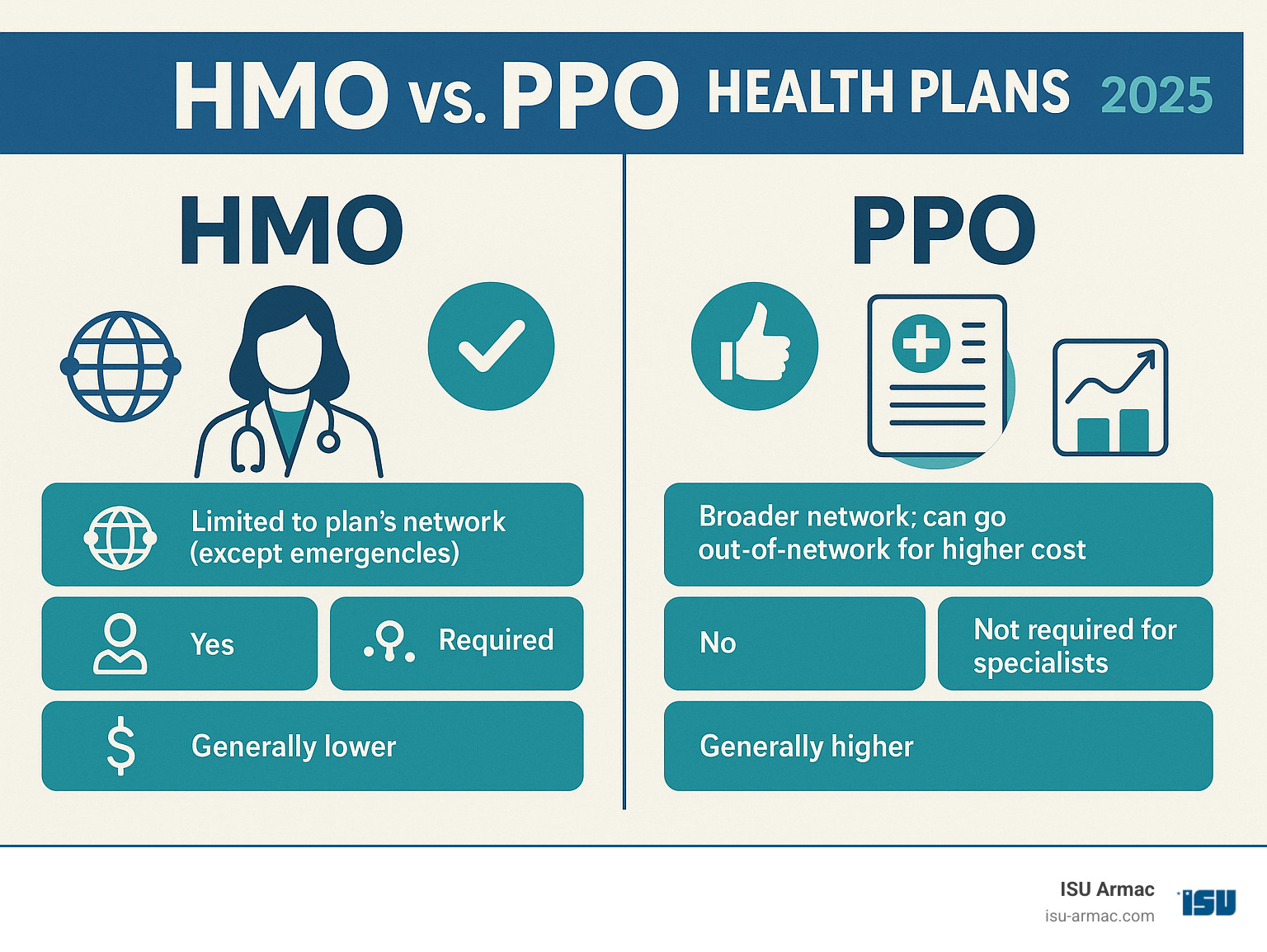
In 2023, 13% of staff members in the U.S. with health insurance protection registered in an HMO plan1. Because these policies typically have lower premiums and out-of-pocket expenses compared to other types of health plans, they can look like an appealing alternative for those trying to find protection. But, the lower general costs featured specific restrictions.
Analyzing HMO Network Flexibility versus Costs
Their HMO likewise won't cover the expenses of out-of-network care or treatment from an expert that occurred without a PCP recommendation, other than if a policyholder requires emergency situation care. Before identifying if an HMO suits you or your company, you must analyze the benefits and drawbacks. HMO strategies normally have low premiums and copayments.
Your plan will likewise generally cover in-network specialist care with only a small copay for services. When you enroll in an HMO plan, you need to pick a PCP who will be your primary point person to reach out to when you require care. In return, they collaborate your care, handle your overall treatment, and make referrals for specialists.
In addition, your PCP acts as your medical supporter, and you might establish a strong bond with them, resulting in you receiving better and more consistent care. While these advantages of HMO strategies may seem luring, there are possible drawbacks that you should consider before registering. If you desire your HMO to cover the cost of your care, you must get care from a specific network of companies in your location.
If you see a non-network service provider, you'll be accountable for your whole costs without the assistance of your insurer. If you require to visit a specialist for treatment, you must ask your PCP for a recommendation for an in-network expert ahead of time. If your PCP does not refer you, you should pay the entire cost of the costs alone, which can be expensive.
However, your policy will detail the scenarios that it thinks about an emergency. If your emergency situation doesn't fit the requirements in your plan, you'll need to foot the bill on your own. In 2023, the typical yearly premium for a group HMO plan was $8,203 for self-only protection and $23,758 for family coverage2.
Insurance in Santee CAEssential Part D Enrollment Tips for Next Year
Like other types of health strategies, HMO policies might have a yearly deductible. A deductible is the set quantity of money a plan individual need to pay out-of-pocket before their insurance company begins to cover their medical care expenses.
KFF found that 33% of individuals registered in a self-only HMO don't have a deductible3. Last but not least, the 2023 out-of-pocket maximum for an Affordable Care Act (ACA) Market plan was $9,100 for self-only coverage and $18,200 for family coverage4. In 2024, the optimum out-of-pocket limitation increased to $9,450 for people and $18,900 for households.
A PPO policy is a type of health insurance in which an insurance service provider agreements with medical professionals, healthcare experts, and medical centers to develop a list of "favored" health care service providers for policyholders. When individuals with a PPO strategy get medical care from an in-network company, their health insurer pays the company at an agreed-upon minimized rate.
PPOs are the most common plan that employers provide. In 2023, 47% of people with a group health insurance coverage plan have a PPO2. These strategies are popular because they don't require members to select a PCP before registering and enable members to pick from a larger range of in-network suppliers than they can with an HMO plan.
However, the out-of-pocket expenses for these services are more pricey. PPO strategies offer several benefits that make getting healthcare a practical and favorable experience. Let's explore some of them below. PPO plans have a broad network of companies using the same kinds of medical services with set comparable rates.

Latest Posts

How to Master Supplemental Insurance This Season
Asset Security Using Life Insurance
How to Lower Your Prescription Drug Costs with Part D